Tree Pruning in Calgary
Types of pruning, when to do it by species, and what it costs.
Why pruning matters
Pruning isn't cosmetic — it's preventive maintenance. A well-pruned tree is safer, healthier, and longer-lived than one left to its own devices in an urban setting.
Safety
Dead branches fall. Crossing limbs rub until one fails. Heavy branches snap under snow or wind. Pruning removes these hazards before they cause damage.
Tree health
Removing dead, diseased, and damaged wood prevents decay from spreading. Opening up a dense canopy improves airflow, reducing conditions that fungal diseases thrive in.
Structure
Correcting a co-dominant stem on a 5-year-old tree takes minutes. Waiting 20 years turns it into a $500 cabling job or a $1,200 removal.
Property value
Healthy, well-maintained trees add measurable value to a home. Overgrown, neglected trees signal deferred maintenance to buyers and appraisers.
Signs your tree needs pruning
Most trees send clear signals when they need attention. If you spot any of the following, it's time to book a pruning visit.
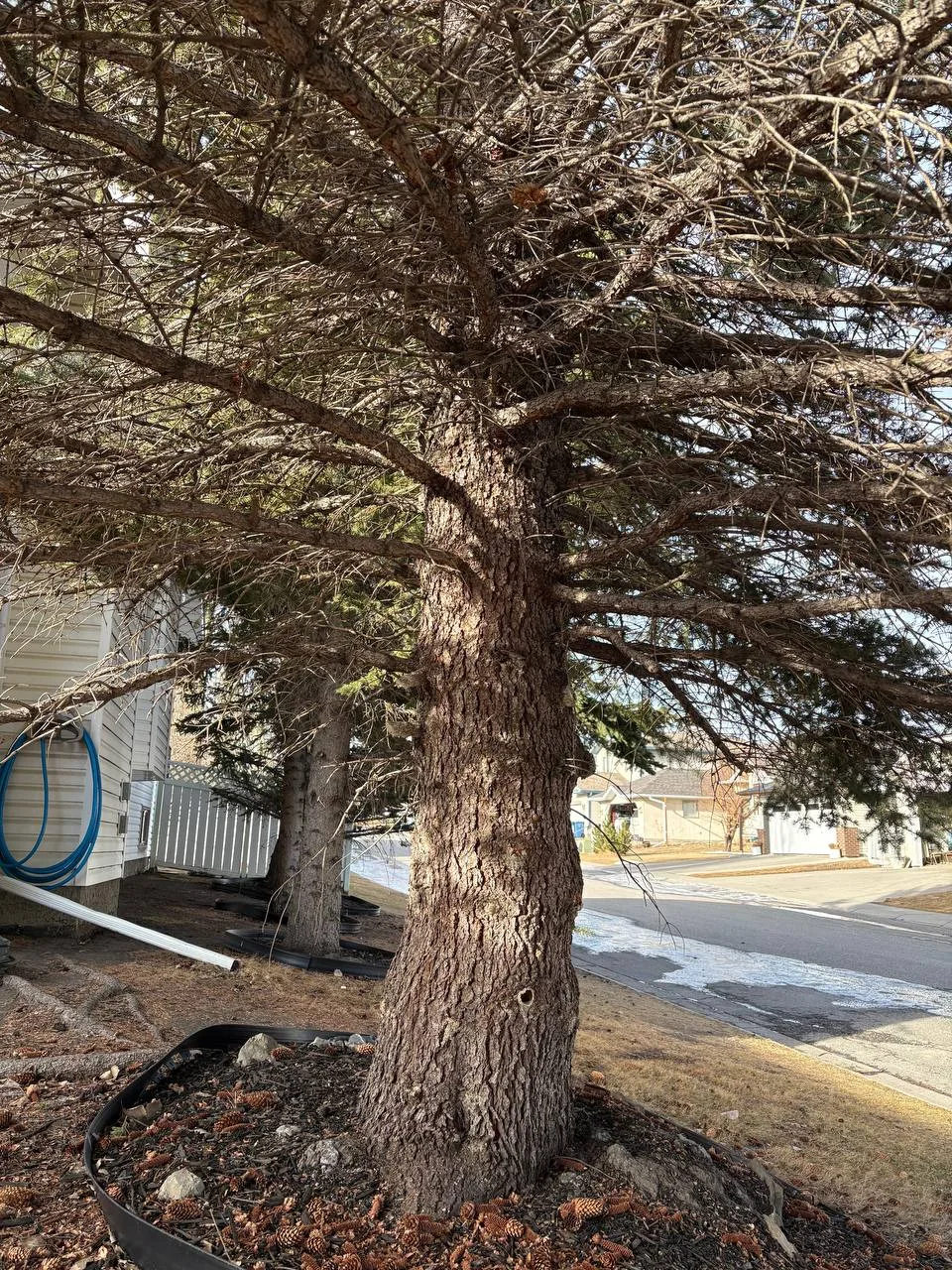
🍂 Dead branches
Bare limbs with no leaves in summer; brittle twigs that snap easily. Dead wood over your house, driveway, or walkway should come off right away.
❌ Crossing or rubbing branches
Creates open wounds where disease enters. Thin these out early before they grow into a bigger problem.
🏠 Branches touching the house
Causes damage over time and gives critters easy attic access. Keep at least three feet of clearance from siding and roof.
🌳 Dense, crowded canopy
Heavy canopies catch more wind and snow, increasing breakage risk. Selective thinning lets light and air through.
⚡ Storm damage
Broken limbs need prompt attention — torn wood is an entry point for decay and a falling hazard until cleaned up.
↯ Suckers & lopsided growth
Sucker shoots drain energy from the main tree. Imbalanced canopies create instability — correcting early prevents bigger problems.
Types of pruning
Deadwooding
Removing dead, dying, and diseased branches. The most basic and most important type — it eliminates hazards and prevents decay from spreading. Can be done any time of year.
Crown cleaning
Selective removal of dead, diseased, crossing, rubbing, and poorly attached branches throughout the canopy. The most common professional pruning work for deciduous trees.
Crown thinning
Selectively removing branches to reduce density. Lets more light and air through, reduces wind resistance, decreases weight on heavy limbs. We never remove more than 20–25% at once.
Crown raising
Removing lower branches for clearance — mowing, walking, vehicles, visibility. Common for street trees and large spruce where lower branches sweep the ground.
Crown reduction
Shortening branches to reduce overall size. Different from "topping" — we make proper cuts back to lateral branches so the tree keeps its natural shape while getting smaller.
Structural pruning
Training young trees to develop strong architecture. Corrects weak branch attachments, establishes a central leader, spaces scaffold branches — preventing problems down the road.
When to prune (by species)
Most deciduous trees
Late winter – early spring (Feb–April) while dormant. Structure is visible, disease risk is low, healing is fast.
Elm
October 1 – March 31 only. Pruning is banned April–September under Alberta provincial law to prevent Dutch Elm Disease.
Birch and maple
June–August. Heavy sap bleeders — pruning during sap flow causes messy dripping. Summer pruning avoids this.
Spruce and pine
Late winter for deadwood and structural work. June for candle pruning to control growth and increase density.
Fruit trees
Late March – early April. While dormant, after the coldest weather. Encourages fruit production.
Spring-flowering shrubs
Immediately after blooming. Lilac, forsythia, mock orange bloom on last year's wood. Pruning before bloom removes the flowers.
Our approach
We have experience pruning all kinds of local trees — from tall spruce and pine, to leafy aspens and poplars, to ornamental crabapple and mountain ash. No matter the species, we make clean cuts at the branch collar so the tree heals efficiently.
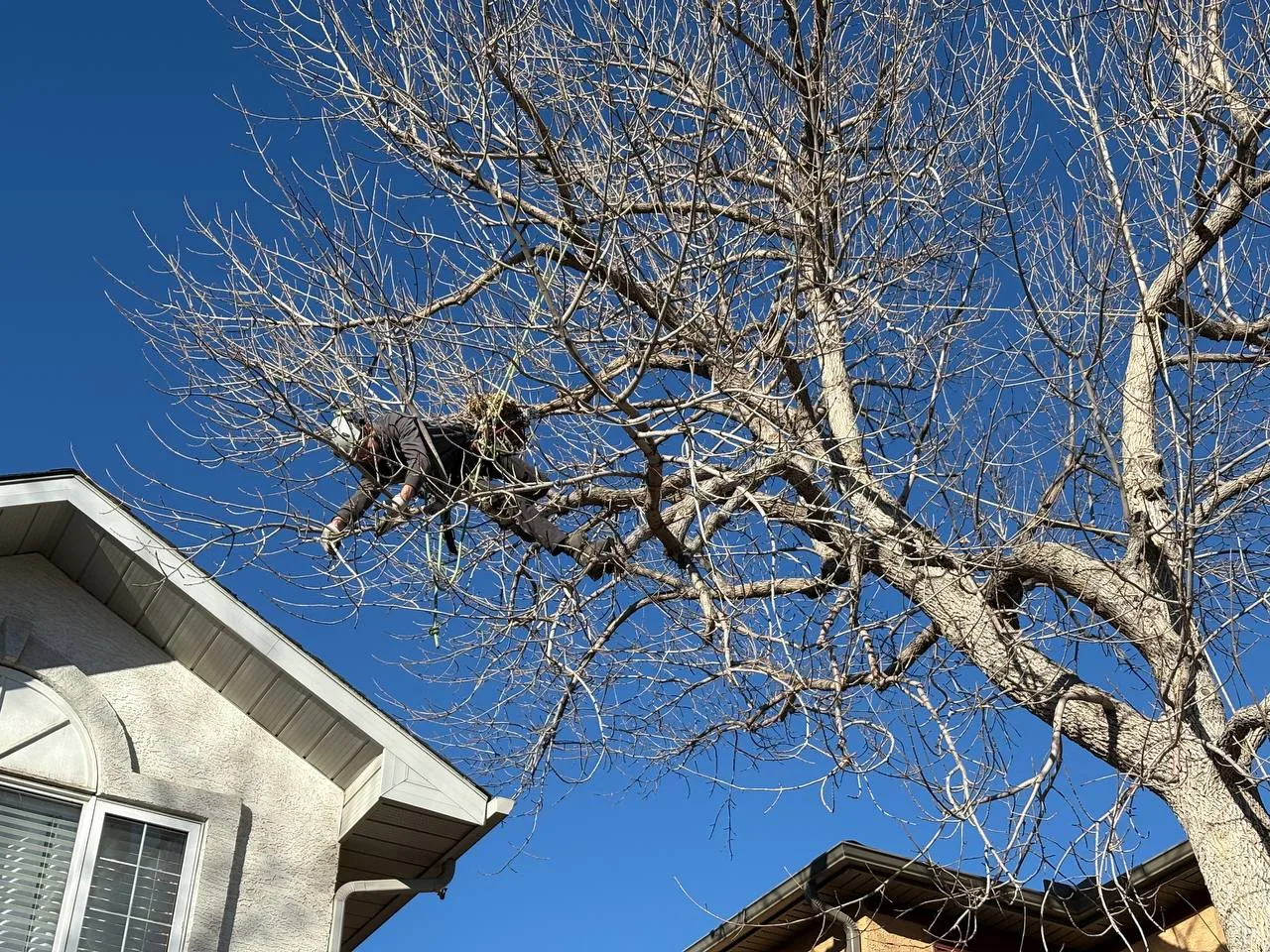
🌲 Conifers
We focus on deadwooding, clearance pruning, and lower limb removal. Spruce and pine don't benefit from thinning the way deciduous trees do — their natural density is a feature, not a problem.
🍂 Deciduous trees
Pruned in late winter when structure is visible. For sap bleeders (birch, maple) we adjust timing. For elms we only work during the legal window and sanitize tools between every tree.
🌸 Flowering & fruit trees
Timing matters — pruning after flowering (for spring bloomers) or in early spring (for fruit trees) encourages better blooms and fruit production.
Costs and common questions
Most residential tree pruning in Calgary costs $150–$700 per tree, depending on size, access, and scope. A small ornamental needing light work might be $150–$250. A large spruce with full deadwood removal could be $400–$700. Multiple trees on the same property are usually discounted.
The cost of not pruning is often higher. A $300 pruning job every 3–5 years prevents the $1,200 emergency removal when a neglected tree drops a major limb on your fence.