Calgary Spring Pruning Guide
What to prune now, what to leave alone, and what's illegal until October.
🌲 Quick Reference
- Best window
- Mid-March to mid-April (while trees are still dormant)
- Elm deadline
- Must prune before April 1 — illegal after that
- Fruit trees
- Prune now for better harvest
- Lilac & Forsythia
- Do NOT touch — prune AFTER flowering
- Birch & Maple
- Wait until summer to avoid sap bleeding
Why this timing works
Late March through mid-April is the prime pruning window for most trees and shrubs in Calgary. Five reasons this window is ideal:
Trees are still dormant
Energy is stored in the roots, not the branches. Cuts cause less stress, and the tree directs its spring surge into healing the wound and producing new growth where you want it.
Worst of winter is over
Fresh cuts exposed to -30°C can freeze and crack bark around the wound. By mid-March, Calgary's coldest nights are behind us.
Structure is visible
Without leaves, the full branch architecture is obvious — crossing limbs, dead wood, weak unions, and structural problems are all easy to spot.
Sap isn't flowing yet
Cleaner cuts, less "bleeding." Especially important for birch and maple, which drip heavily when cut during active sap flow.
Insects aren't active
Many diseases — including Dutch Elm Disease — are spread by insects attracted to fresh pruning wounds. Dormant-season pruning cuts this risk dramatically.
Prune these trees now (March – April)
Fruit trees: apple, cherry, plum, pear
Fruit trees are best pruned in late March to early April, while still dormant but after the coldest weather has passed. This timing encourages strong spring growth and improves fruit production.
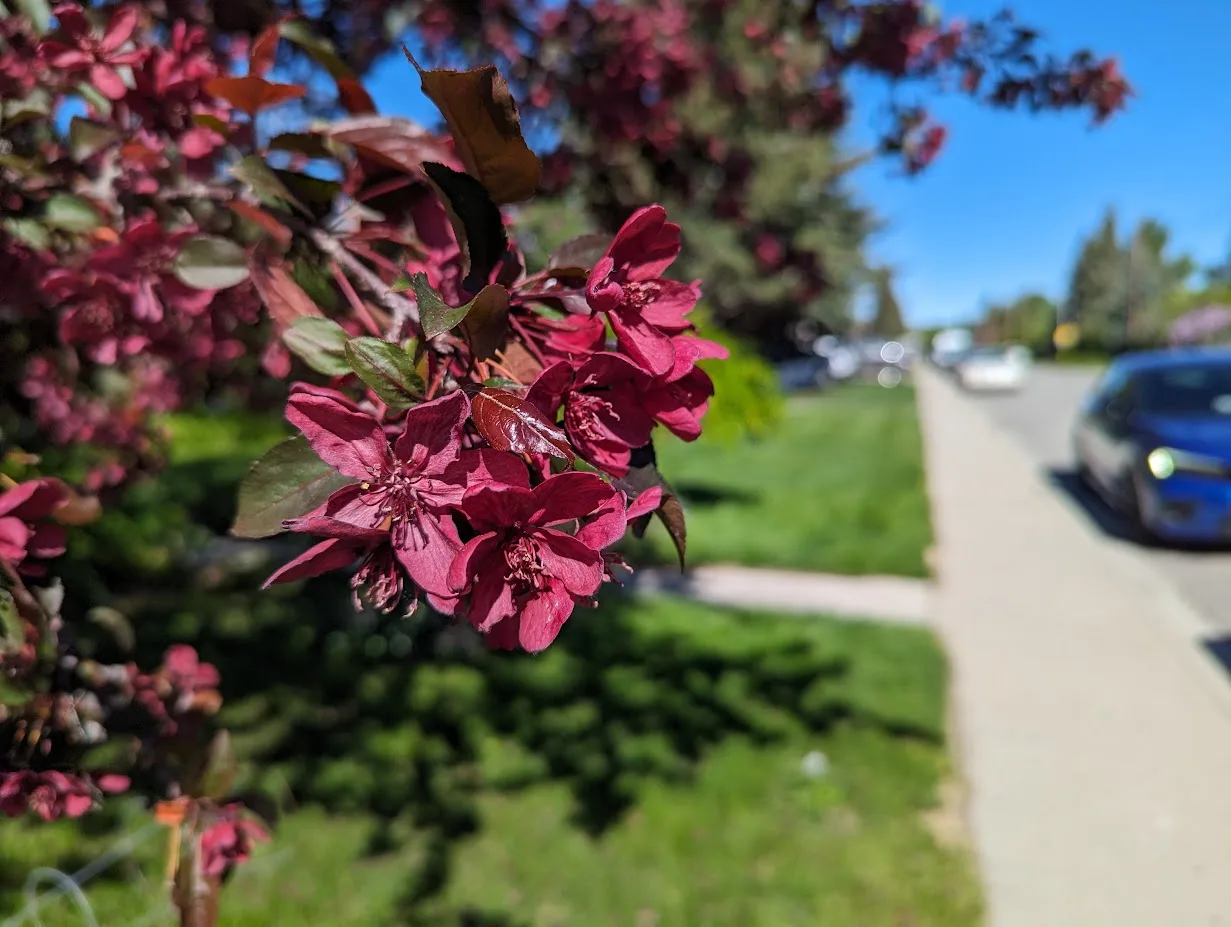
For apples and crabapples, focus on opening up the center of the tree so sunlight can reach all the branches. Remove any suckers growing from the base, water shoots (those vertical branches that sprout straight up), and any branches that cross or rub against each other. The goal is a vase or goblet shape with good airflow through the canopy.
Sour cherries like the Evans cherry — one of the few cherries hardy enough for Calgary — respond well to spring pruning. Keep the center open and remove dead wood. Avoid heavy pruning, as cherries can be sensitive.
Plums and pears follow similar rules. Light annual pruning keeps them productive. Heavy cuts encourage excessive vegetative growth at the expense of fruit.
Spruce and pine
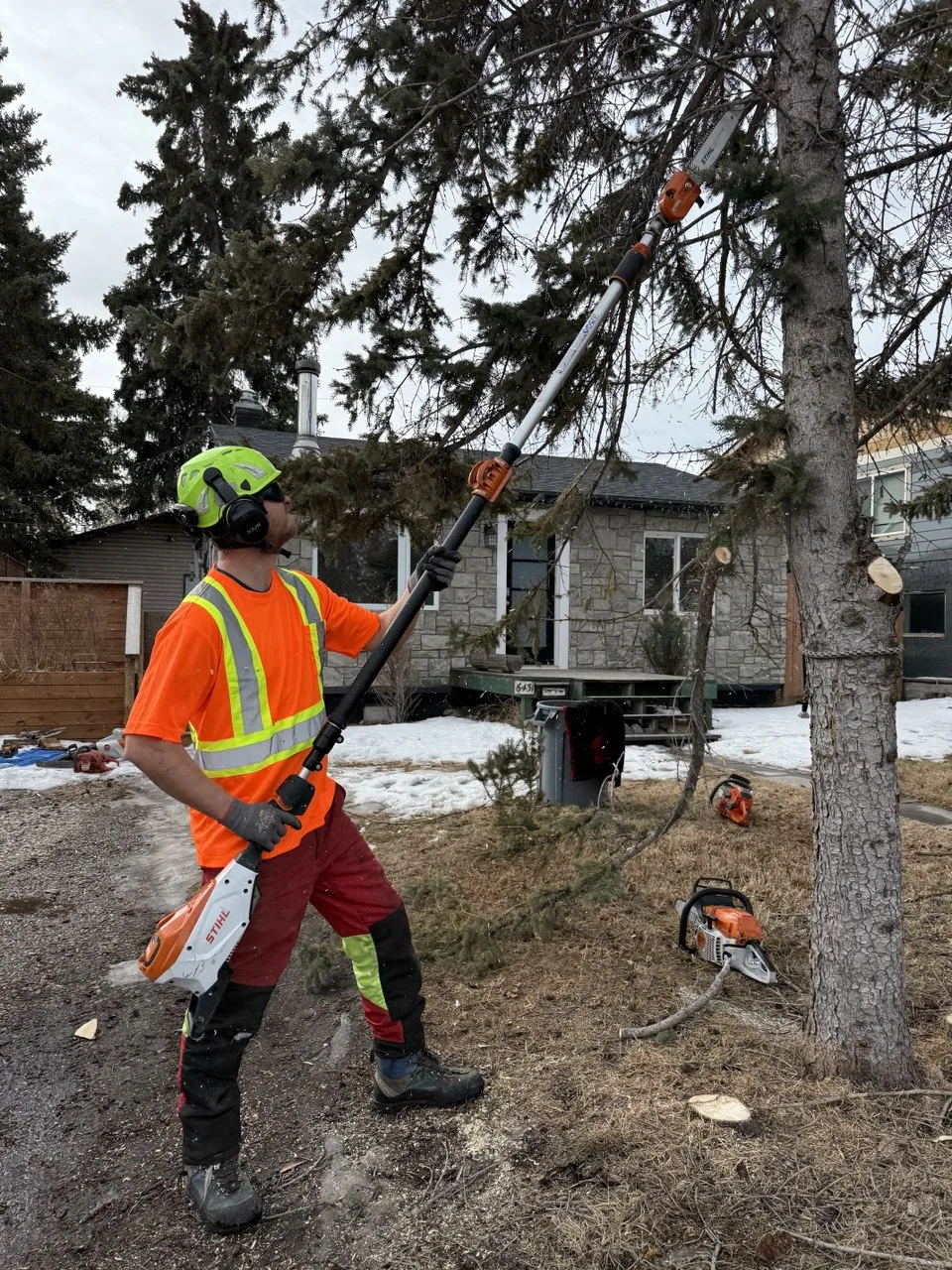
Evergreens don't require much pruning, but early spring is a good time to remove dead branches, correct any lopsided growth, or manage size.
For spruce, you can do light shaping in March or April. If you want to make spruce denser and more compact, wait until June and cut the new "candles" (the soft new growth at branch tips) back by about half before the needles fully unfold.
Pines work similarly. Snap or cut the candles in half in late May or early June to encourage bushier growth. This is how you keep a pine compact or control the size of a Scots pine.
Ash, aspen, and poplar
🌳 Ash
Prune in early spring while still dormant. Focus on structure — remove crossing branches and maintain a strong central leader.
🌳 Aspen & poplar
Trickier. Pruning triggers suckers everywhere, so keep cuts minimal. Early spring (before growth begins) causes less suckering than summer pruning.
Flowering shrubs that bloom on new wood
Some shrubs produce flowers on growth that happens in the current year. For these, spring pruning means more branches — and more flowers later in summer.
🌸 Pink & Japanese spirea
Cut back hard in early spring — even down to a few inches above the ground. They regrow vigorously and bloom on new wood in summer.
🌼 Potentilla
Light spring pruning to remove dead tips and spark fresh growth. Tough prairie shrubs — very forgiving of cuts.
🍃 Ninebark
Responds well to pruning. Cut back leggy stems in early spring to encourage a denser, fuller shape.
💠 Panicle & smooth hydrangea
Limelight, Annabelle, and similar varieties bloom on new wood. Cut back last year's stems in late winter or early spring. (Mophead hydrangeas bloom on old wood — but those rarely survive Calgary winters.)
🌹 Shrub roses
Parkland and Explorer series: remove dead and damaged canes once you can assess winter damage. Cut back to healthy white pith inside the stem.
Have a question that's not answered here?
Contact us — we're happy to help.
Trees and shrubs to leave alone in spring
Elm trees — it's the law
Alberta has a provincial elm pruning ban from April 1 to September 30. During these months, it's illegal to prune elm trees anywhere in the province.
This law exists to prevent Dutch Elm Disease, a deadly fungus that has devastated elm populations across North America. The disease is spread by elm bark beetles, which are active during warm months and attracted to the smell of fresh pruning cuts.
Alberta has one of the last large, healthy elm populations on the continent. The pruning ban, combined with strict rules about elm wood disposal, has kept Dutch Elm Disease from gaining a foothold here. If your elm needs work, it must be done before April 1 or after October 1. See our Calgary elm pruning guide for full timing, identification, and disposal rules — and the bylaws guide for fines and enforcement details.
Birch and maple — wait until summer
Birch and maple should not be pruned in spring. Both are heavy "bleeders" — cut them while sap is flowing and they drip copious amounts of sticky liquid from the wound. This isn't just messy: it weakens the tree and opens an entry point for insects and disease. Birch in particular can struggle to recover from spring pruning.
The right window for birch and maple is June through July, after leaves have fully expanded and sap flow has slowed. Cuts seal faster and the tree handles the stress better. If a branch is hazardous or broken, remove it in any season — safety first — but save routine maintenance for summer.
Spring-blooming shrubs — prune after they flower
Many popular spring-blooming shrubs in Calgary set their flower buds the previous year. Prune them in spring before bloom and you remove this year's flowers.

💜 Lilac
The classic example. Those May flowers were set last summer. Prune right after flowering (late May / June). Lilacs are tough and respond well to hard renovation pruning.
💛 Forsythia
Bright yellow flowers appear on old wood. Prune immediately after flowering — never before.
🌸 Nanking cherry & double flowering plum
Spring bloomers that set buds the previous year. Prune after the flowers fade.
🤍 White bridal wreath spirea
Different from pink spirea (which blooms on new wood). This one flowers on old growth — wait until blooms finish.
Dead wood exception
The only thing you should prune year-round, any time of year, is dead wood. If a branch is clearly dead, remove it. Dead branches have no buds, break easily, have gray or blackened bark, don't bend — they snap — and may be bare even while surrounding branches have leaves.
Removing dead wood improves the tree's appearance, reduces disease risk, and is always the right call, regardless of season.
Hedges — spring trimming and renovation
Spring is also an important time for hedge care. Here's what to do — and not do — with Calgary's most common hedges.
🌿 Cotoneaster
Calgary's most common hedge. Plan on two trims: first in late spring once new growth extends a few inches, second in late summer. Shape wider at the base than the top — a top-heavy hedge shades its own base and goes bare at the bottom. Overgrown hedges can be cut back hard in late winter and will regrow.
🌾 Caragana
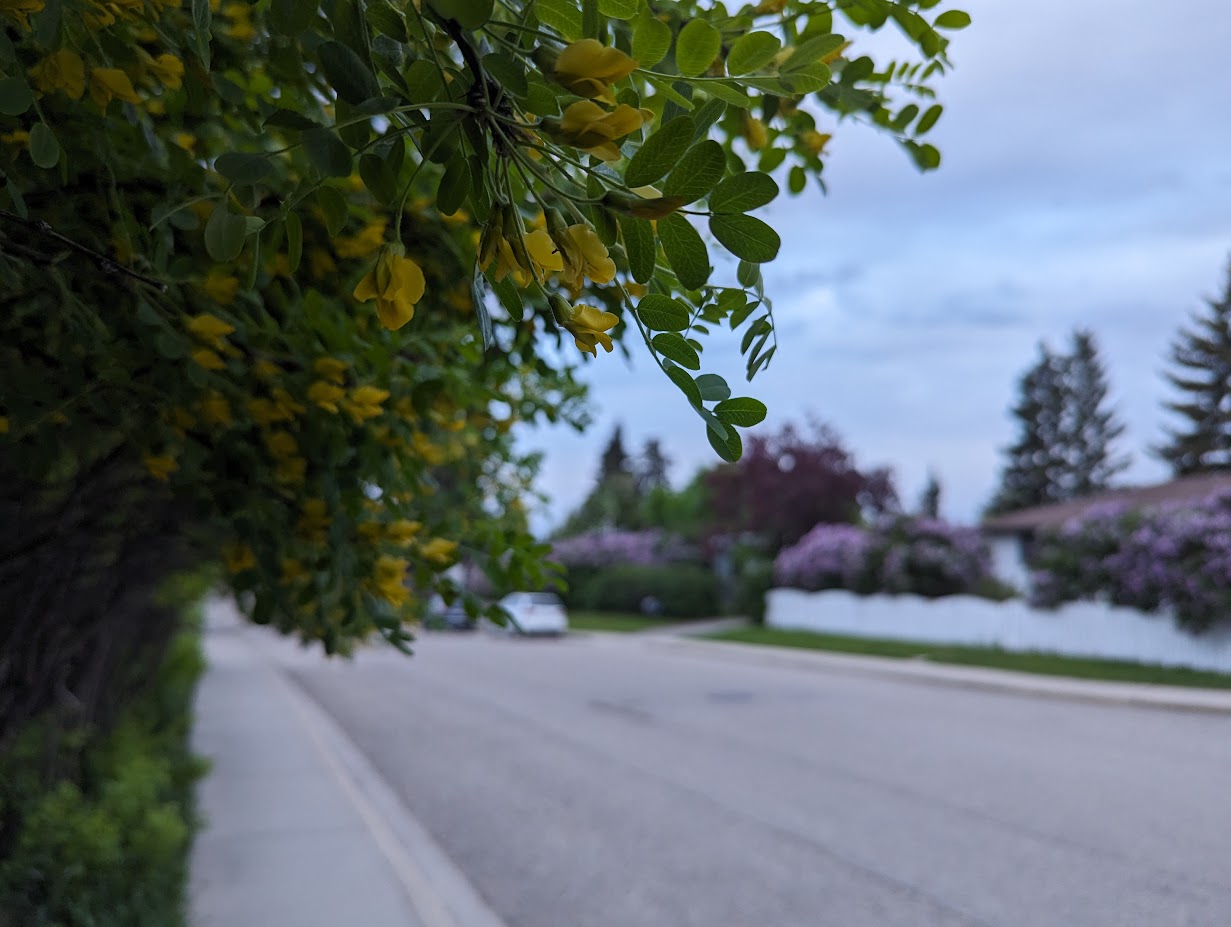
Tough and drought-tolerant. Prune right after flowering (late May / June). Tolerates hard renovation pruning. Watch for powdery mildew on the shaded side — it can spread through dense, unpruned growth.
💜 Lilac hedges
Timing is critical. Wait until right after blooming (early June). For renovation, cut one-third of the oldest stems to the ground each year over three years — keeps flowers while gradually renewing the hedge.
🌲 Cedar & juniper
Never cut into bare wood. They won't regrow from old wood with no green foliage. Only trim green growth. If a cedar hedge has been let go and grown past its desired size, the overgrown part is permanent.
Final tips for spring pruning in Calgary
Use sharp tools
Dull saws and pruners crush tissue and slow healing. Clean cuts with sharp blades are always better for the tree.
Make proper cuts
Cut just outside the branch collar — the swollen area where a branch meets the trunk. Never leave a stub. Never paint over cuts; trees seal wounds naturally, and paint traps moisture.
Don't top trees
Removing the top creates a thicket of weak shoots prone to breaking. If a tree is too tall, hire an arborist — proper reduction pruning is an art, not a chainsaw shortcut.
The one-third rule
Don't remove more than about a third of a tree's canopy in one year (except in emergencies). The tree needs foliage to manufacture food and recover from pruning stress.
Hire a pro when needed
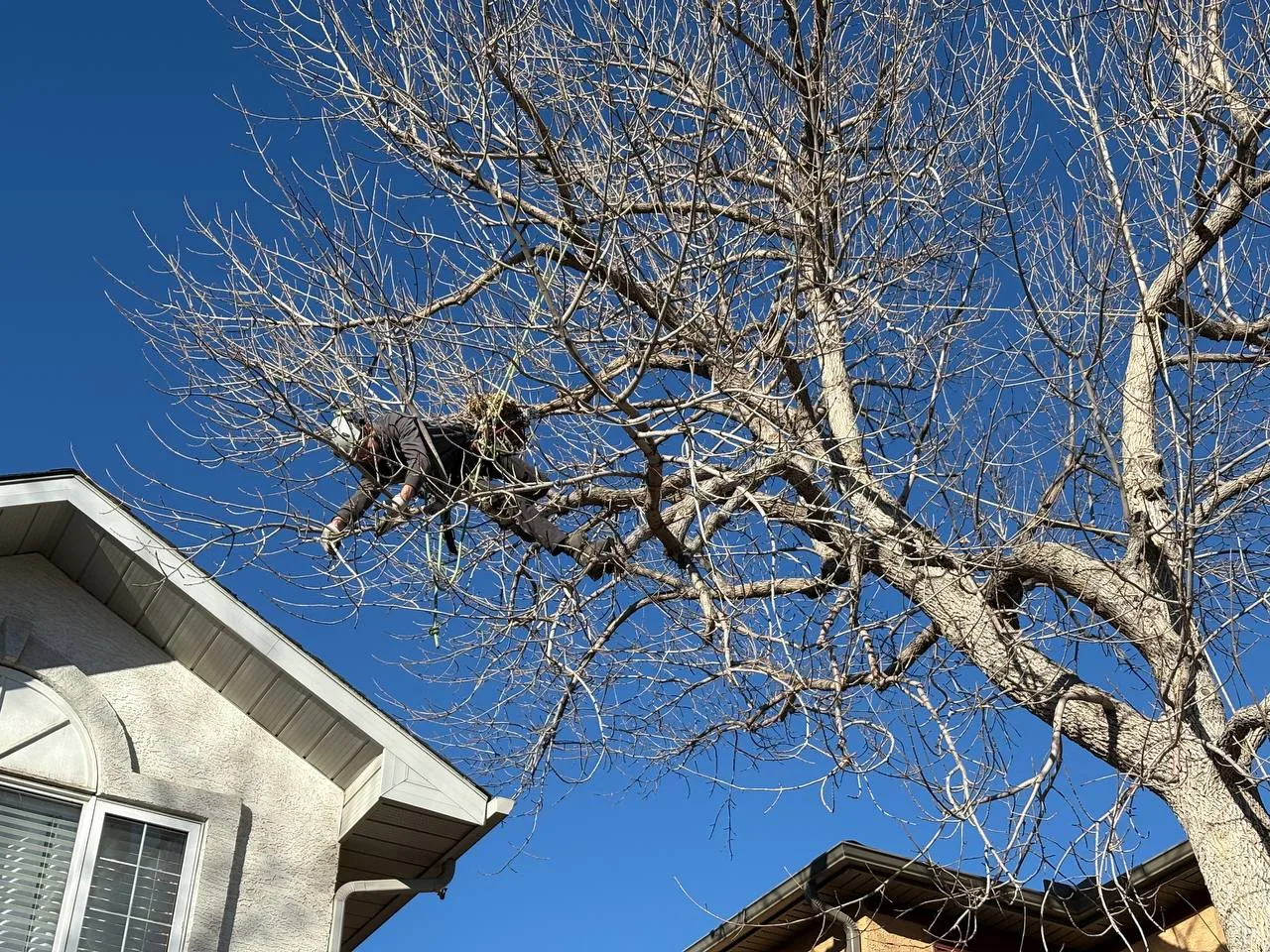
Pruning from height requires skill and safety gear. If the work involves climbing or a chainsaw, call an arborist. It's not worth the risk.
When to call an arborist
You don't need an arborist for every pruning job. Light shaping of small shrubs, deadheading, and removing suckers are fine to do yourself. But call a professional when:
Height
Branches are higher than you can safely reach from the ground.
Hazards nearby
The tree is near power lines, your house, or a fence.
Disease signs
You see fungus, unusual discoloration, cankers, or the tree is an elm (proper tool sanitation is critical for DED prevention).
Structural problems
Co-dominant stems, heavy lean, major deadwood, or you're simply not sure what you have or when to prune it.