Calgary Elm Pruning Guide
Why elms can only be pruned October–March, how to spot Dutch elm disease, and what proper elm care looks like.
🌳 Quick Reference
- Pruning window
- October 1 – March 31 (the only legal time to prune elm in Alberta)
- Pruning ban
- April 1 – September 30 — illegal province-wide
- Applies to
- All elm trees in Alberta — private and public property
- Disposal deadline
- All pruned elm wood must be burned, buried, or chipped by March 31
- Fines
- $100 to $10,000 under Alberta's Agricultural Pests Act
- Typical pruning cost
- $200 – $800 in Calgary, depending on size, access, and scope
Why the ban exists
The reason is a fungus called Ophiostoma novo-ulmi — known as Dutch elm disease (DED). It has destroyed tens of millions of elms across the United States and Eastern Canada. Alberta is one of the last large regions on the continent that's still DED-free, and the pruning ban is a big part of why.
Five things make spring and summer pruning a problem:
Beetles are active
Elm bark beetles fly from April through September. They carry the DED fungus from infected trees to healthy ones.
Cuts attract them
The scent of fresh elm sap pulls beetles in from a surprising distance. A pruning wound is essentially an invitation.
Warm weather speeds spread
Above ~15°C, beetle activity, fungal growth, and infection rates all accelerate. Cold dormancy slams the brakes.
Sap is flowing
Active sap flow in spring and summer means cuts bleed and stay open longer — more time for spores to enter the vascular system.
Dormant cuts are safer
Between October and March, beetles are dormant, the fungus barely grows, and the tree's wounds seal cleanly before spring.
The pruning window — October 1 to March 31
You have six months to prune an elm. Within that window, some timing is better than others.
Best: late October through November
Once leaves have fully dropped and Calgary has had its first hard frost, the tree is dormant. Pruning a dormant elm causes minimal stress, the cut surface dries quickly, and the wound has months to begin sealing before spring growth resumes.
Also good: February to mid-March
Late winter is the second strong window. The tree's still dormant, beetles are still inactive, and you get the work done with time to spare before the March 31 disposal deadline.
Avoid: very early October
A warm Calgary fall can keep elms actively growing into early October. It's legal to prune from October 1, but if leaves are still green and clinging, the tree is still moving sap — better to wait two or three weeks.
Avoid: deep winter snap
At -25°C and below, fresh cuts can freeze-crack and bark can split around the wound. If a cold front is forecast, wait it out.
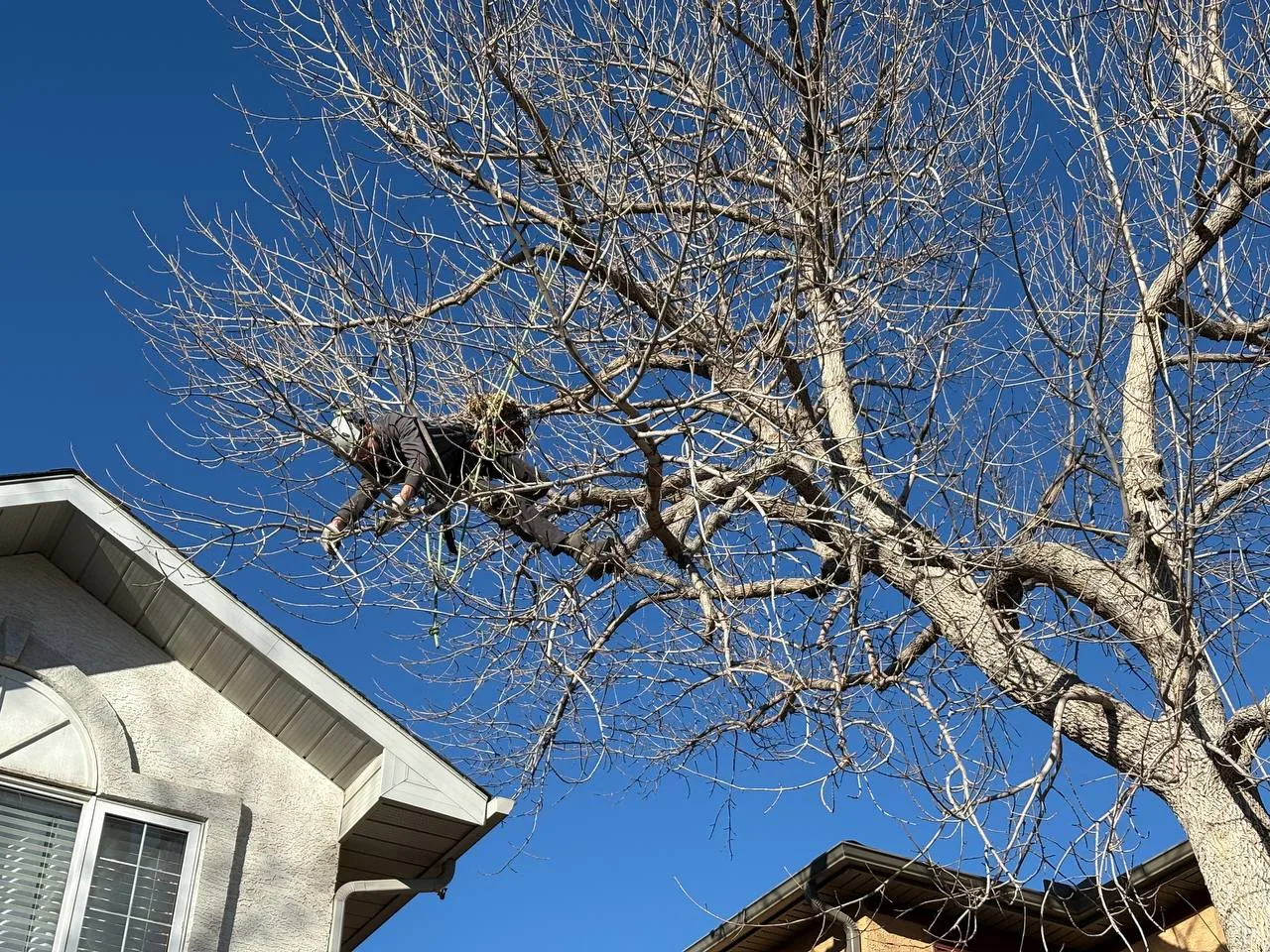
Is it actually an elm?
Plenty of Calgary homeowners are surprised to learn their tree isn't what they thought it was. Before you panic about the ban — or break it — confirm what you have. Three quick checks:
🍃 Leaves
Oval, doubly-toothed (like little teeth on bigger teeth), and asymmetrical at the base — one side of the leaf attaches slightly higher than the other. The asymmetry is the dead giveaway.
🌳 Canopy shape
Mature American elms have a distinctive vase or umbrella shape — a single trunk that branches into a graceful spreading crown. Siberian elms (also common in Calgary) are more irregular and shrub-like.
🌲 Bark
Grey-brown with deep, interlacing ridges that form a rough diamond pattern on mature trunks. Younger bark is smoother but still has that vertical fissuring.
What proper elm pruning looks like
Elm pruning isn't a one-size-fits-all job. A mature American elm with a 60-foot canopy needs different work than a young Siberian elm crowding a fence line. We follow ISA (International Society of Arboriculture) best practices, which generally fall into four techniques:
Deadwood removal
The single most important elm task. Dead branches are prime habitat for elm bark beetles. Removing them every couple of years is one of the best DED-prevention moves a homeowner can make.
Crown thinning
Selectively remove crossing, rubbing, or competing branches inside the canopy. Lets light and air through, reduces wind sail, and keeps the tree's natural shape intact.
Crown raising
Lift the lower branches to clear sidewalks, driveways, and rooflines. Common for boulevard elms over walkways. Done conservatively — never remove more than the bottom third of the canopy.
Crown reduction
For elms that have grown too large for their site. Carefully shorten major limbs back to a strong lateral branch. Slow, technical work — never a chainsaw shortcut.
Tool sanitation matters. When working on multiple elms, or after touching a tree that looks suspicious, we sterilize saws and pruners between cuts. The DED fungus can ride along on a contaminated blade. This is one reason DIY elm pruning gets discouraged — even with the best intentions, an unsanitized tool can move disease between trees.
Disposing of elm wood — by March 31
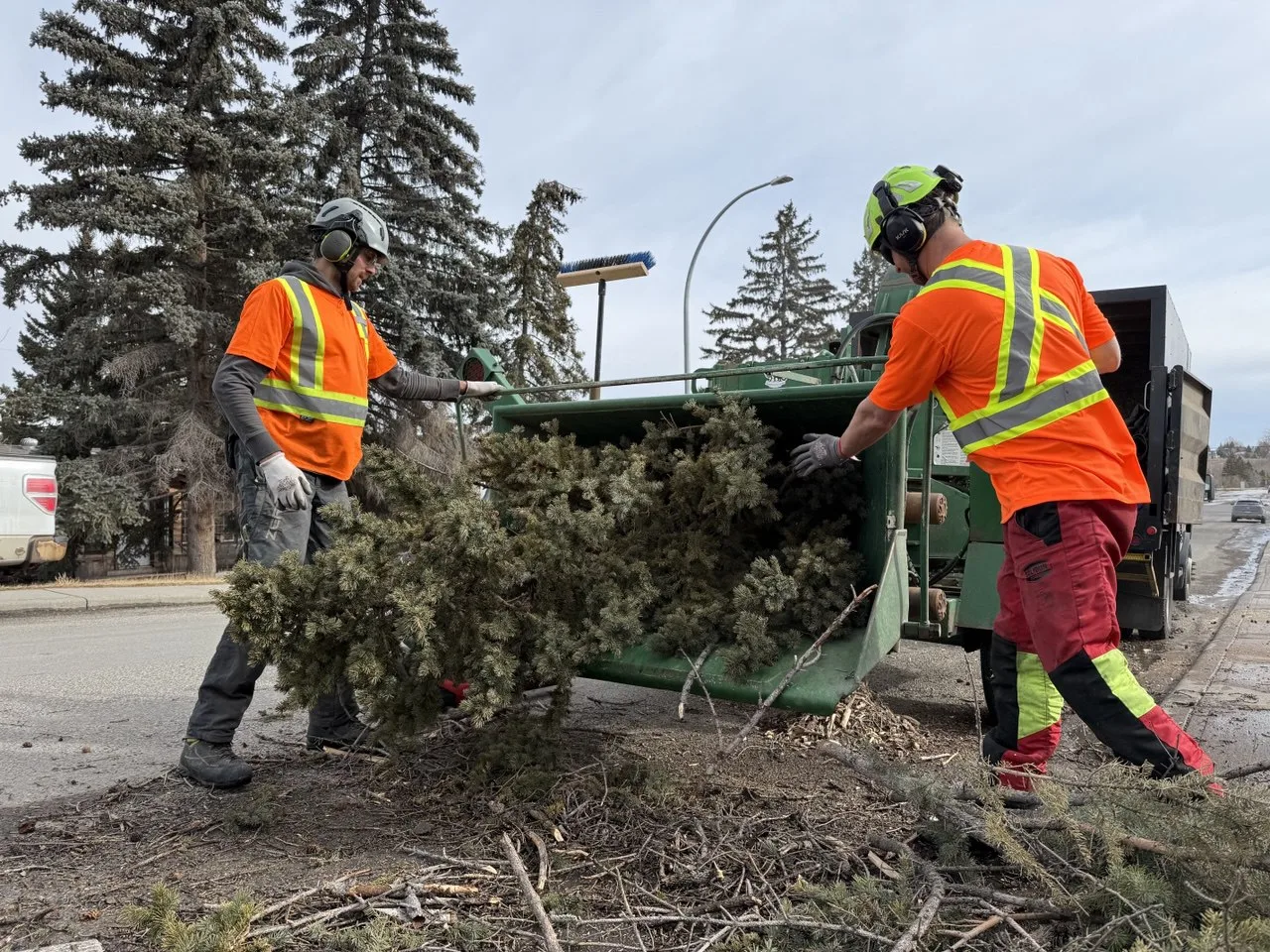
Pruning is half the job. Disposal is the other half — and it's regulated just as strictly. All elm wood from pruning or removal must be burned, buried, or chipped by March 31 each year. After that date, any remaining elm wood is considered a violation.
The reason is simple. Cut elm wood — even a stack of firewood from a healthy tree — is ideal beetle habitat. Beetles overwinter under the bark, emerge in spring, and disperse looking for healthy elms to colonize. A neglected woodpile in your backyard could seed an outbreak across the neighbourhood.
Three legal options:
Chip it. Wood chipped to under 5 cm pieces is no longer beetle habitat. This is what we do on every elm job — branches go straight from the tree into the chipper.
Burn it. Permitted in some rural areas, not legal inside Calgary city limits without specific approval.
Bury it. Less common for homeowners — generally only used when chipping isn't feasible.
Spotting Dutch elm disease
Early detection is everything. A single infected tree, caught early and removed properly, can save dozens of neighbouring elms. The same tree, missed for a season, becomes a beetle factory. Three symptoms to watch for during summer:
Flagging
The most visible early sign. One or more individual branches show yellowing or wilting leaves in the middle of summer, while the rest of the tree looks completely healthy. Looks like a dead "flag" hanging in a green canopy.
Brown streaking
Peel back the bark of an affected branch and you'll see dark brown or grey streaking in the wood beneath. This is the fungus blocking the tree's water-conducting vessels.
Premature leaf drop
Affected branches drop leaves weeks before fall. By August, the dying branches may be bare while the rest of the tree is still green.
Call the STOPDED hotline at 1-877-837-ELMS (1-877-837-3567) or report online at stopded.org. Don't prune the tree yourself. A trained arborist or city inspector will assess and arrange proper sampling and removal. Early action protects every elm in your neighbourhood.
Book your fall elm pruning
The October window fills up fast. Reserve your spot now — we'll come look at the tree, give you a firm quote, and schedule the work for early October.