Hedge Trimming & Shrub Care in Calgary
When to trim, how we do it, and what Calgary hedges need.
Proper hedge and shrub trimming maintains plant health, controls growth, and keeps your landscape safe and well-defined. We provide precise trimming for hedges and ornamental shrubs to improve structure, encourage healthy growth, and keep your yard looking clean and maintained.
Why trim shrubs?
Regular trimming prevents shrubs from getting overgrown and unruly. By cutting back excess growth, we encourage the plant to become fuller and denser — no more leggy, thin-looking bushes.
Trimming also stimulates more flowers on blooming shrubs: for example, pruning your lilac or spirea at the right time can lead to more blossoms the next season.
It also removes any dead or diseased wood hiding inside, keeping the shrub healthy. And of course, a well-shaped shrub simply looks nicer, whether it's meant to provide privacy, accent your flowerbed, or frame your front door.
If a shrub is very overgrown, we may recommend rejuvenation pruning — removing the oldest, thickest stems to the ground to encourage new shoots. Done during dormancy (late winter), it can bring tired plants back to life within a season or two.
Our shrub care know-how
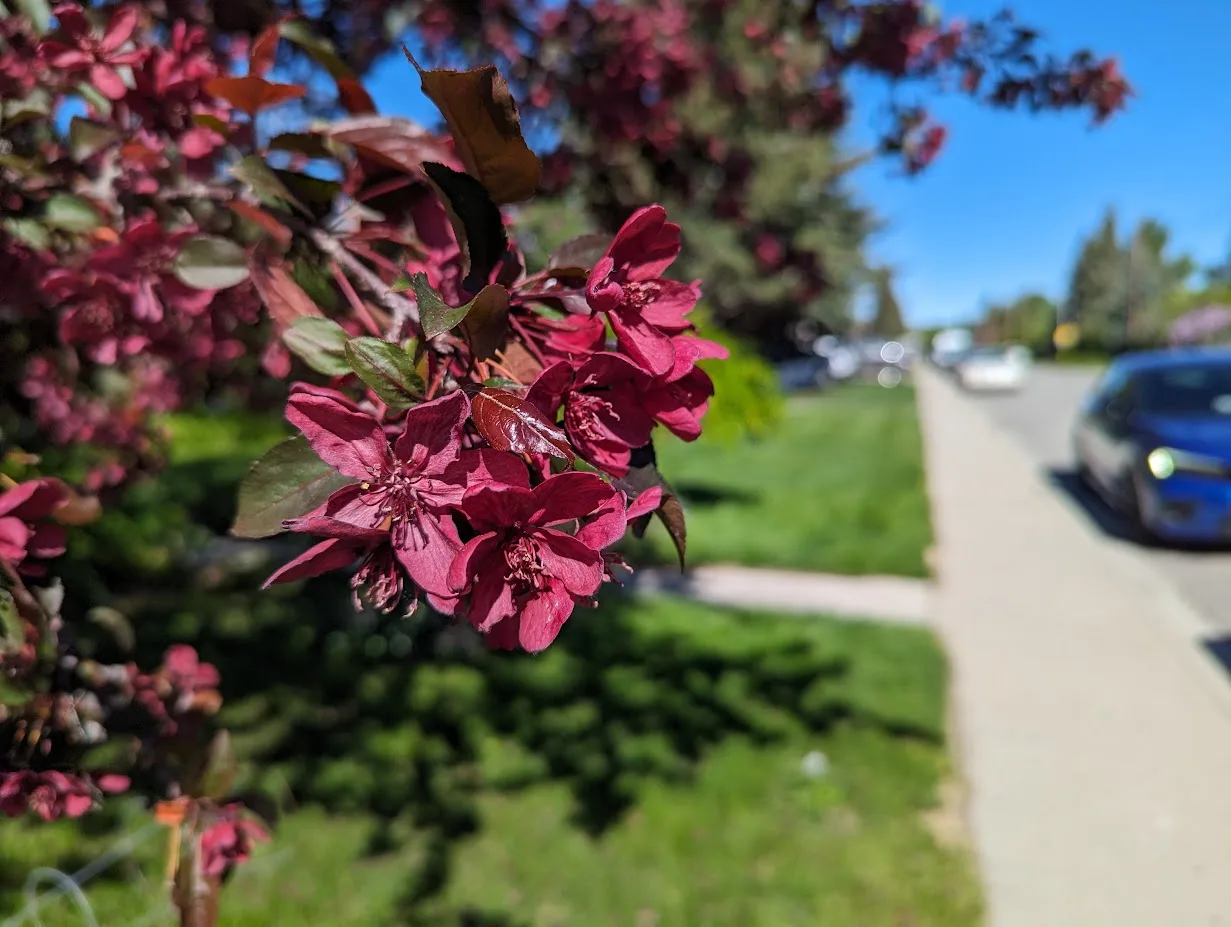
We are familiar with the common shrubs in Calgary gardens and the surrounding boreal region. From flowering shrubs like lilac, ninebark, hydrangea, or rose, to evergreen shrubs like juniper or mugo pine, to deciduous bushes like dogwood or cotoneaster, each has its ideal pruning method and season.
🌸 Lilacs, mock orange, forsythia
Spring-bloomers: trim just after they finish flowering, usually early June. This way we don't accidentally cut off next year's developing flower buds. We'll deadhead old blossoms and thin out older stems to rejuvenate the plant. Don't prune before bloom or you'll lose the flowers entirely.
🌿 Spirea, ninebark, potentilla, barberry
Summer-blooming shrubs or those grown for foliage: late winter or early spring trimming works best. We can cut back and shape them before the growth starts, which promotes lots of fresh new branches and better flowering on the current season's wood.
🌲 Juniper, mugo pine
Evergreen shrubs can be lightly trimmed almost any time, but we usually do it in late spring or early summer once we see how the winter affected them. We avoid cutting back to bare wood on evergreens — they won't regrow from old wood, so they need to stay green to recover naturally.
🟥 Red-twig dogwood, willow
Prune the oldest stems to the ground in early spring. This forces bright new growth with the best winter colour. Without regular renewal pruning, the stems turn dull grey-brown and the whole point of the plant is lost.
How we handle shrub trimming
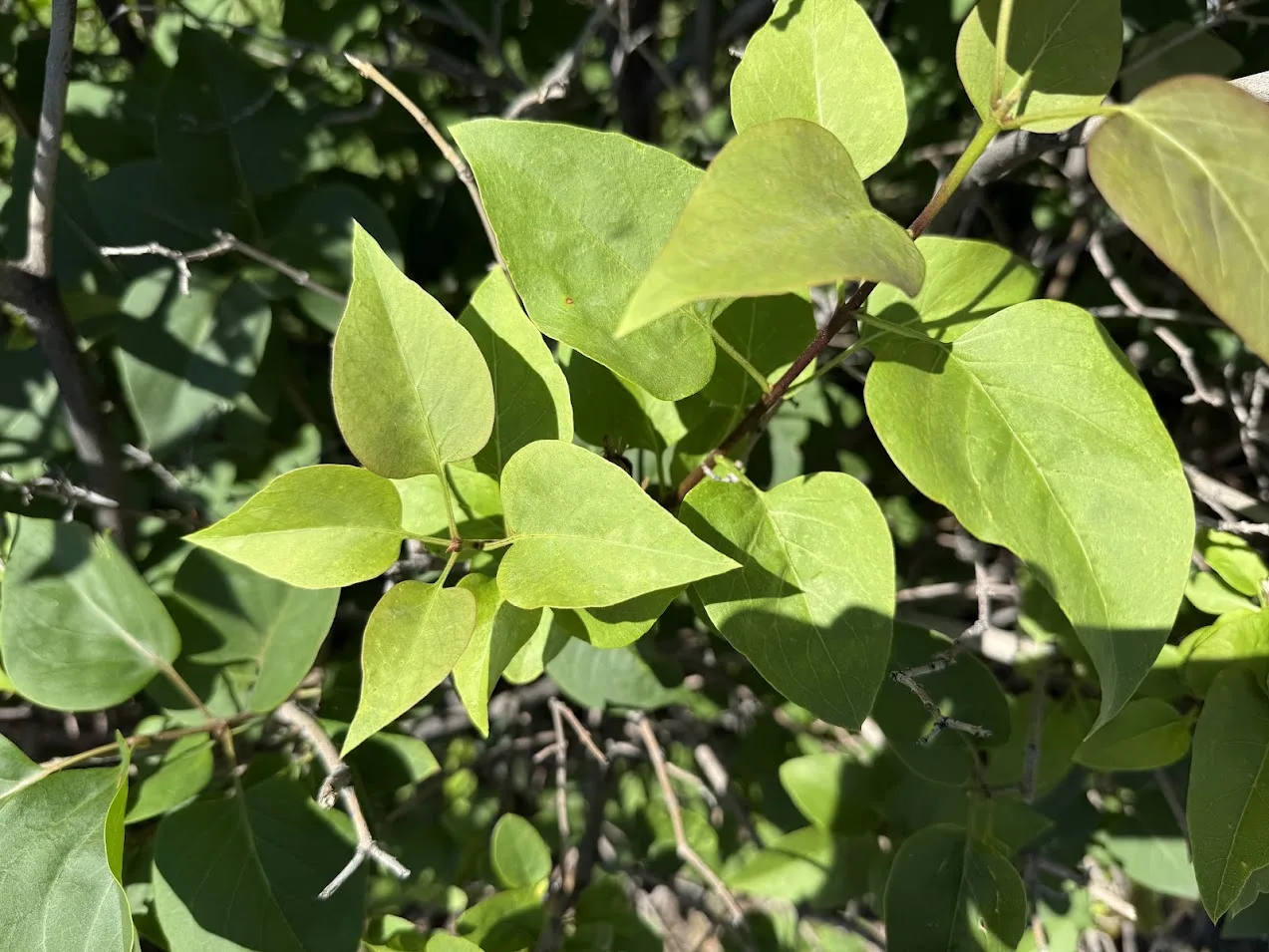
Our team will identify which branches to trim and which to keep, aiming for a balanced, natural shape. We'll make sure not to harm the parts of the plant that are doing well.
We use sharp hand pruners for detailed shaping and selective cuts on smaller shrubs, and professional power trimmers for larger, tougher jobs. Either way, we prioritize clean, healthy cuts — dull blades tear tissue and invite disease.
For overgrown shrubs, we'll discuss whether a simple trim or a full rejuvenation pruning makes more sense. Rejuvenation involves removing the oldest, thickest stems at the base during dormancy — it looks drastic, but the plant responds with vigorous new growth within a season or two.
All the trimmed bits — leaves, twigs, sticks — will be cleaned up from your mulch and lawn. We can bag the debris for city compost pickup or take it away entirely.
By the time we're done, your shrubs will be nicely shaped but not stubby — they'll still have a natural look, just tidier. With regular trimming (usually once a year, or twice for fast-growers), your shrubs will stay healthier, produce better blooms or foliage, and keep the intended size and form in your landscape.
Why hedge trimming matters
A well-kept hedge is like a living fence that adds charm and privacy to your property. We handle all types of hedges — from a row of upright junipers to a classic cotoneaster or cedar hedge — using careful trimming techniques to achieve a uniform look.
Hedges can quickly grow shaggy and uneven without regular maintenance. Trimming encourages hedges to branch out and fill in, so you get a dense screen rather than sparse, patchy growth. By cutting back the new growth periodically, we also keep the hedge at your desired height and width.
This is especially important in Calgary, where a hedge might otherwise grow too tall and suffer breakage from heavy snow or wind. Regular hedge care not only keeps them looking neat (improving curb appeal), but also promotes plant health by removing dead sections and improving air circulation within the foliage.
Common Calgary hedges
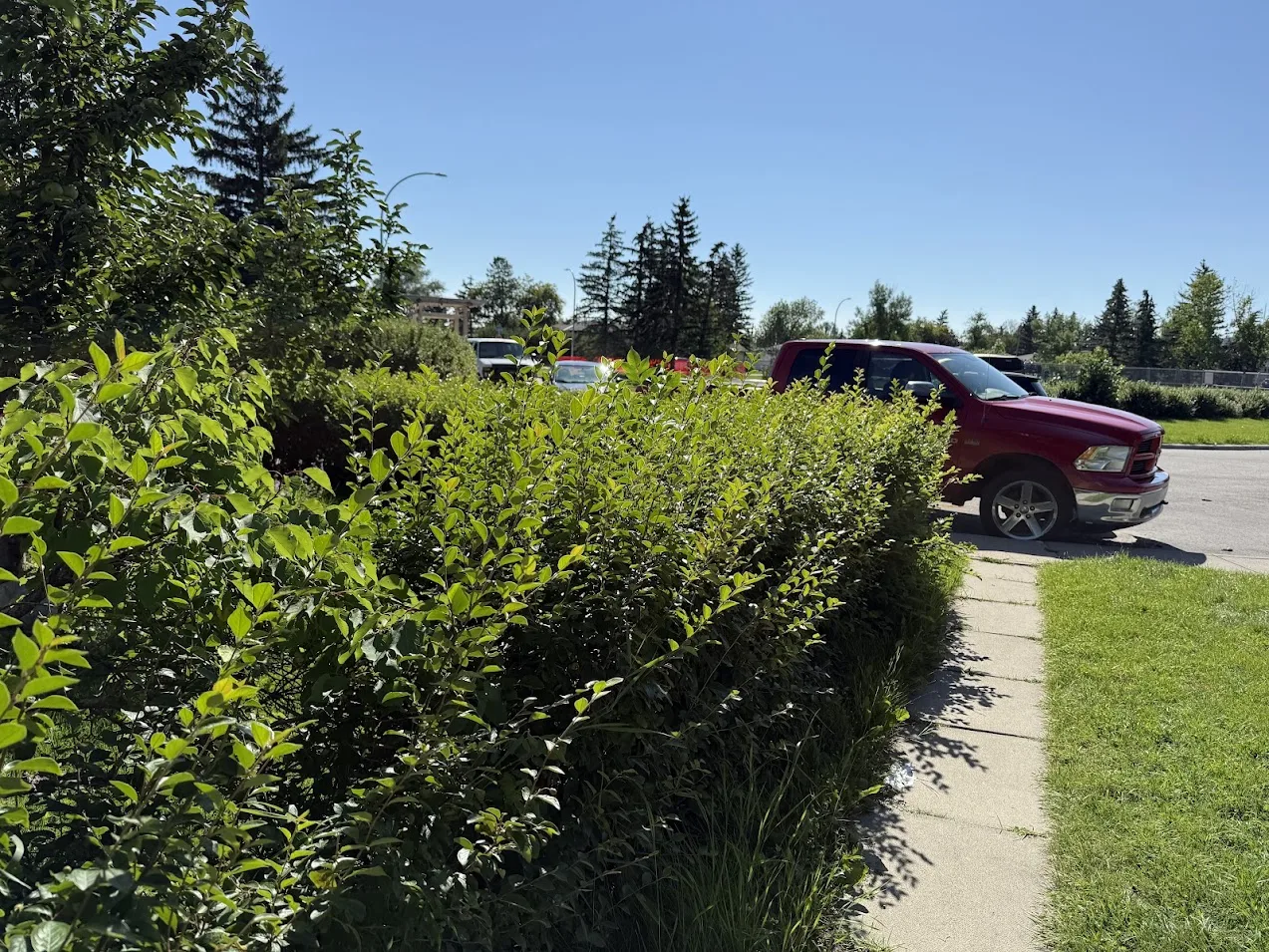
Cotoneaster — Calgary's most common hedge plant. Tough, fast-growing, tolerates hard pruning. Trim 1–2 times per season. Interior often becomes a tangle of dead wood in neglected hedges — renovation fixes this.
Caragana — drought-tolerant and extremely hardy. Can get leggy and produce suckers. Best pruned after flowering (late May/June). Watch for powdery mildew on the shaded side.
Lilac — beautiful and fragrant, but timing is critical. Prune immediately after flowering (early June). For renovation, cut one-third of oldest stems to ground each year over three years.
Cedar / Juniper — evergreen hedges needing gentle handling. Never cut into bare wood — they won't regrow. Only trim green growth. If overgrown into bare wood, the damage is permanent.
Our hedge trimming approach
We usually trim hedges about 1–2 times per growing season, depending on how fast they grow and your preference. The typical schedule for Calgary is a major trim in late spring/early summer (after the first flush of growth), and an optional light trim in late summer or early fall.
The taper rule
Always trim hedges wider at the bottom than the top. This ensures sunlight reaches the lower branches, keeping the hedge dense all the way down. A top-heavy hedge shades its own base and goes bare at the bottom — the most common hedge problem we see.
Sharp tools, clean cuts
Dull blades tear plant tissue instead of cutting cleanly. Torn edges heal slowly and invite disease. We keep hand shears and professional trimmers razor-sharp. For detailed work on smaller hedges, we use hand shears. For long runs of cotoneaster or caragana, power trimmers do the job faster and more evenly.
Don't over-cut
For maintenance trims, take off only the current season's growth. Cutting deeper into old wood is fine for rejuvenation on deciduous hedges, but has a different recovery timeline — and for cedar/juniper, cutting into bare wood means permanent damage.
Timing matters
Late spring to early summer for the main trim (after the first flush). Optional light trim in late summer. Avoid trimming after mid-August — new growth won't harden before frost. For spring-flowering hedges like lilac, trim right after bloom, not before.
What to expect on the day
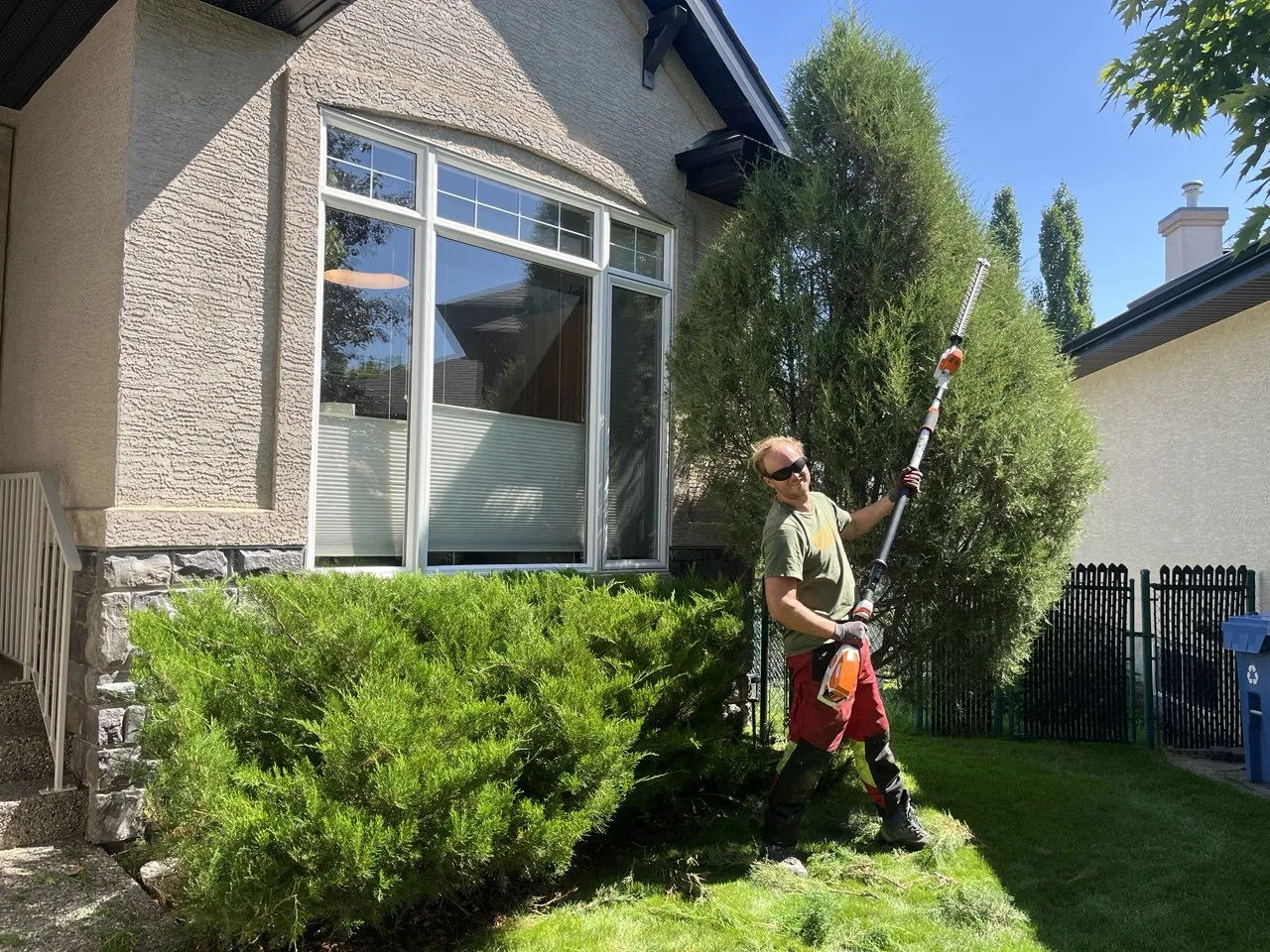
When we arrive, we discuss the height and shape you want — flat-topped, rounded, or natural. We'll talk through any problem areas (bare spots, uneven growth, dead sections) and explain what's realistic.
We place tarps along the base to catch clippings, then trim the hedge to shape. After trimming, we rake and collect everything — your beds, lawn, and walkways will be clean when we leave. You can choose to compost the clippings yourself or have us haul them away.
The result is a hedge that's dense, even, and shaped properly — wider at the bottom than the top, so it stays healthy and full for the whole season.
Cost and common questions
Hedge trimming starts at $150 and depends on length, height, accessibility, and cleanup requirements. Shrub pruning is quoted per plant based on size and condition. We give a firm price after assessing the job — no surprises.