Stump Grinding: What You Need to Know
What happens after the tree is gone, and whether you need it.
Why remove a stump
You have a stump on your property that shouldn't be there. While it may look simple, removing a stump — especially a large one — can be extremely difficult or nearly impossible without professional equipment.
Removing even a small stump can be surprisingly challenging. Digging it out by hand is often unrealistic, and heavy excavation equipment can damage lawns, fences, and underground services. Professional stump grinding is the most practical solution for most Calgary homeowners.
Safety. Stumps are trip hazards, especially once grass grows around them and they become less visible. This is a concern where children play or in areas you mow.
Pests. Decaying wood attracts carpenter ants, beetles, and other wood-boring insects. You don't want that colony established next to your house.
Regrowth. Some species — poplar, elm, Manitoba maple — send up aggressive sucker shoots from the remaining root system. Grinding significantly reduces this.
Future use. If you want to plant a new tree, lay sod, build a garden bed, or install a patio, the stump needs to go first.
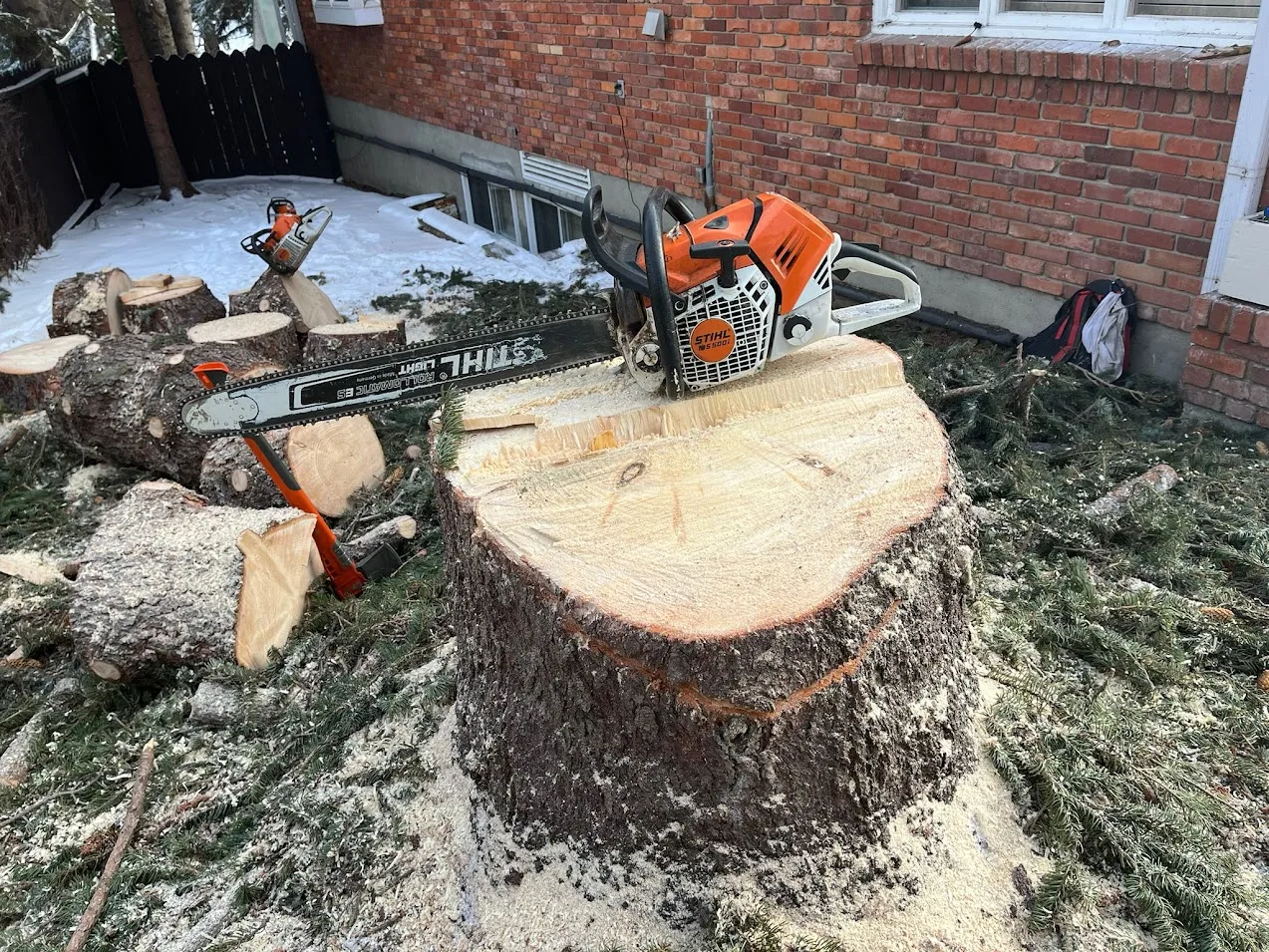
Grinding vs. other methods
✅ Grinding (recommended)
A machine with a rotating cutting wheel grinds the stump into small chips, 6–12 inches below ground. Fast (30 min to a few hours), effective, minimal yard disruption. The standard method for residential stumps.
Full excavation
Digging out the entire stump and root ball with heavy equipment. Thorough but destructive — tears up the yard. Only necessary when the area must be completely root-free (foundations, paving).
Natural decomposition
Leaving the stump to rot. Takes 5–15 years. You can drill holes and add nitrogen fertilizer to speed it up slightly. Fine if you're patient and the stump isn't in the way.
Chemical stump removers
Products like potassium nitrate accelerate decomposition, but don't dissolve the stump — they just speed up rotting from years to months. You still end up with a soft, punky mass.
Should I leave the stump or remove it?
Only you can decide. Some people leave stumps as part of the landscape — using them as natural features, wildlife habitat, or even outdoor tables. If the stump is far from use areas, it can be left to naturally decompose over 10–20 years.
However, stump removal is usually the better choice if:
- You want a clean, usable lawn
- You're planning landscaping or construction
- The stump is a tripping hazard
- You want to prevent pests or regrowth
For most properties in Calgary, removing the stump makes life easier in the long run. But if you have a stump tucked away in a back corner that nobody trips over, there's no rush.
Once the stump is gone, you're free to plant a new tree, build a deck or patio, restore a smooth and beautiful lawn, or bring in landscapers to complete your project. Most people find that removing the stump opens up possibilities they hadn't considered.
How grinding works
A stump grinder is a powerful, specialized machine designed to destroy a stump by grinding it into small pieces. The machine uses a rotating flywheel equipped with carbide teeth that shave the wood away inch by inch. As the grinder moves through the stump and surrounding soil, the wood is reduced into a mix of wood chips and soil.
The operator moves it back and forth across the face of the stump, grinding progressively deeper with each pass. With the right experience and control, we can grind the stump below ground level, remove problem surface roots if needed, and leave the area ready for landscaping, lawn repair, or replanting.
Grinding depth
Standard depth is 6–12 inches below ground level. Deep enough to lay sod, plant a garden, or return to lawn. Deeper grinding available if you plan to plant a new tree in the same spot.
Surface roots
We can chase and grind visible surface roots that extend outward. Especially important for poplar and elm, which have aggressive surface root systems that trip people and damage lawns.
The chips
Grinding produces a wood chip/soil mix — typically 2–3× the volume of the original stump. Can be used as backfill, spread as garden mulch, or hauled away.
Property protection
Protective shields on the grinder, controlled grinding direction away from structures, careful positioning around fences, buildings, and gardens.
How we handle stump grinding
Stump grinding may look aggressive, but doing it properly requires care, planning, and precision.
Your project comes first
Every client and every property is different. Before we start, we take time to understand what you want to do with the area afterward, how deep the stump needs to be ground, whether surface roots should be addressed, and whether wood chips should stay or be removed.
Our goal is to make your next step — landscaping, construction, or lawn repair — smooth and stress-free.
Protecting your property
Stump grinding involves powerful machinery and flying debris. Preventing damage is essential. We use protective shields and covers, control the grinding direction away from structures, and carefully position around fences, buildings, and gardens.
After grinding, we can rake the wood chips and leave them neatly on site, or remove the grindings completely if you prefer. We'll discuss cleanup preferences before we start — no assumptions, no surprises.
Have a question?
We're happy to answer any questions about stump grinding before you commit.
Cost and seasonal considerations
As a general reference, expect approximately $10 CAD per inch of stump diameter. A 12-inch poplar stump might cost $120–$150. A 30-inch spruce with extensive surface roots could be $300–$400. Multiple stumps on the same visit are usually discounted.
Factors: stump diameter, wood hardness (spruce grinds faster than elm), number of stumps, access, surface root extent, desired depth, and surrounding obstacles.
Seasonal tip: Stump grinding is much easier from spring through fall. Frozen ground in winter makes the job harder and less efficient. For best results and pricing, schedule during warmer months.
Before starting any work, I personally inspect the stump and provide:
- A clear explanation of what will be done
- How deep the stump will be ground
- Whether surface roots are included
- What cleanup is included
- A firm price with no surprises
Clear expectations are part of professional work. We always provide a firm price after inspecting the stump. The quote includes grinding depth, whether surface roots are included, cleanup, and total price. No surprises.
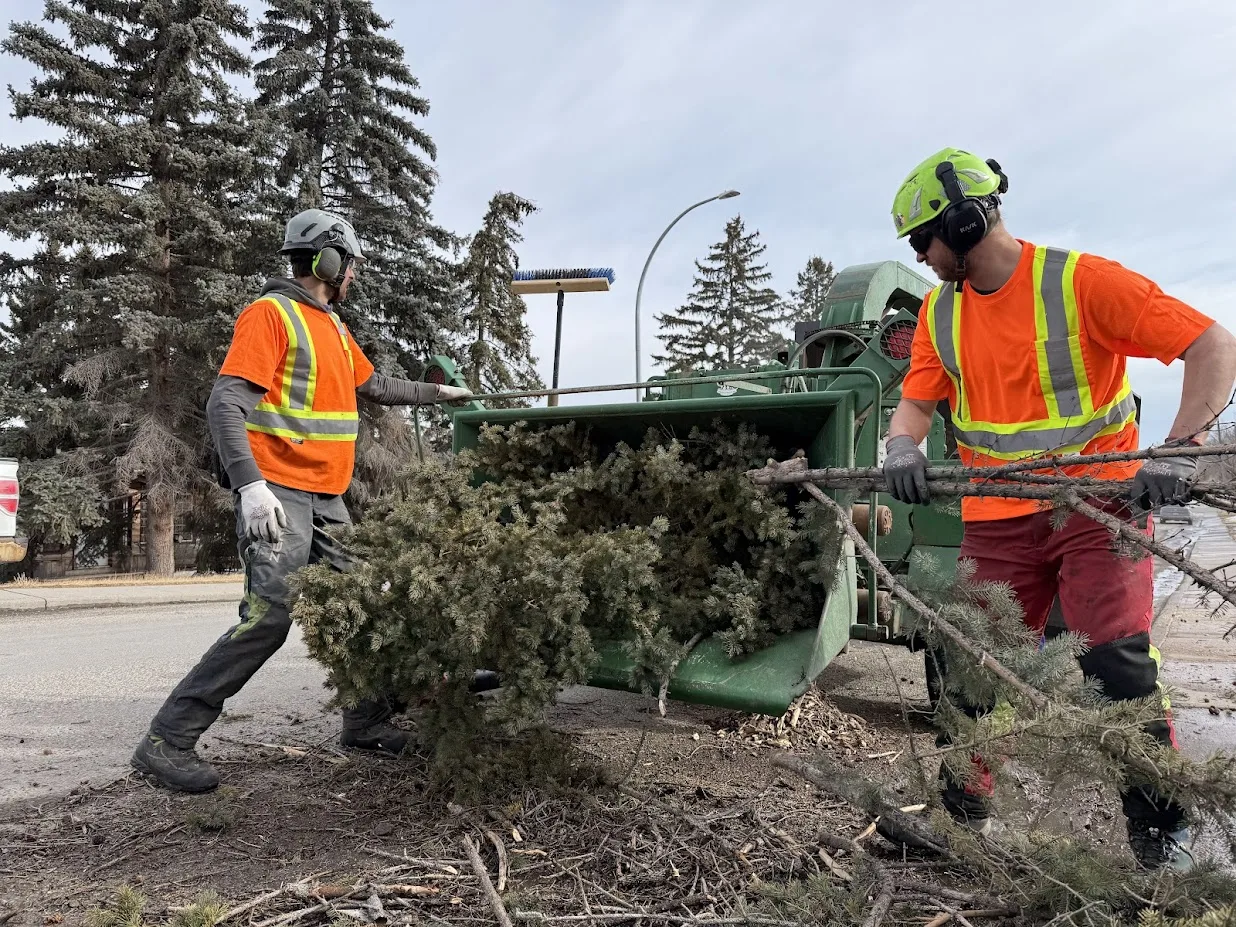
After the grind
Immediately after
You'll have a hole filled with wood chips and soil. The area around the stump will look disturbed but not damaged. We rake, clean, and leave the site tidy.
First few weeks
The chip-and-soil mix will settle as it compacts and decomposes. You may need to add more topsoil to bring the area level.
Ongoing
Remaining underground roots decompose naturally over 2–5 years. Some species (poplar, elm) may still send up sucker shoots — mow them down consistently and they'll exhaust themselves.
Replanting
You can plant grass seed or lay sod after adding topsoil. To plant a new tree, choose a spot at least 3–4 feet from the old stump location, where soil isn't full of wood chips.
Once the stump is gone, you're free to:
- Plant a new tree
- Build a deck or patio
- Restore a smooth, beautiful lawn
- Bring in landscapers to complete your project